How Florida Heat Silently Damages the Wiring Inside Your Walls
Florida homeowners worry about hurricanes, lightning, and flooding. These are visible, dramatic threats. But there is a quieter danger working against your home every single day, and it never makes the news. Heat.
The attic spaces and exterior walls of Florida homes regularly exceed 140 to 160 degrees during summer months. Electrical wiring running through those spaces absorbs that heat day after day, year after year. Over time, the insulation around those wires degrades, cracks, and eventually fails. When it does, exposed conductors create fire and shock hazards that are completely hidden from view.
How Wiring Insulation Works
Every electrical wire in your home is wrapped in a layer of insulation, typically PVC or thermoplastic material. This insulation serves two purposes. It prevents electricity from escaping the conductor, and it prevents conductors from touching each other or touching grounded surfaces.
When insulation is intact, the wiring is safe. When it degrades, cracks, or falls away, the conductor is exposed and dangerous.
Why Florida Attics Are So Destructive to Wiring
Attic temperatures in Central Florida routinely exceed 150 degrees during summer. This is not occasional. It happens almost every day from May through September.
Continuous Thermal Stress
Wiring insulation is rated for specific temperature ranges. When those temperatures are exceeded repeatedly, the material begins to break down chemically. It loses flexibility, becomes brittle, and eventually cracks.
UV Exposure in Open Attics
Wiring that passes near vents or in areas where sunlight enters the attic receives UV exposure that accelerates insulation degradation. The combination of heat and UV is particularly damaging.
Lack of Airflow
Poorly ventilated attics trap heat, creating conditions that are significantly worse than outdoor temperatures. Wiring in these dead-air spaces experiences the most extreme and sustained heat exposure.
The Progression of Heat Damage
Insulation does not fail suddenly. It degrades in stages.
Stage One: Hardening
The flexible insulation becomes stiff and rigid. It can no longer move with the natural expansion and contraction of the wire or the building structure. At this stage, the insulation is still intact but vulnerable.
Stage Two: Cracking
Rigid insulation cracks when stressed by vibration, movement, or additional heat cycling. Cracks expose the conductor beneath, creating potential contact points with other wires, metal framing, or insulation material.
Stage Three: Flaking and Separation
Advanced degradation causes insulation to flake away from the conductor entirely. Large sections of exposed wire create serious fire and shock risk, especially near combustible attic insulation.
Where Heat Damage Is Most Common
Certain locations in a home are more susceptible than others.
Attic Runs
Any wiring that passes through the attic space is exposed to the highest temperatures. Romex cable running across attic joists or through insulation takes the worst abuse.
Exterior Walls
South-facing and west-facing exterior walls absorb significant heat. Wiring inside these walls experiences temperatures well above the conditioned interior.
Near Recessed Lighting
Older recessed light fixtures generate substantial heat. Wiring connected to these fixtures experiences localized high temperatures in addition to ambient attic heat.
Inside the Electrical Panel
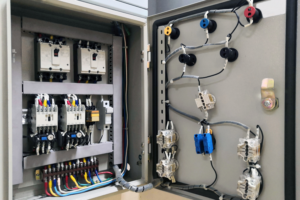
Panels installed on exterior walls or in garages can reach high temperatures. Combined with the heat generated by the electrical load itself, panel wiring insulation degrades faster in these locations.
The Signs That Heat Damage May Be Present
Heat damage to wiring is hidden inside walls and attics, but some indicators suggest it may be occurring.
Breakers Tripping Without Obvious Cause
Degraded insulation can create intermittent contact between conductors or between a conductor and ground. This triggers breaker trips that seem random.
Burning Smell Without Visible Source
A faint burning plastic smell that you cannot locate may indicate insulation beginning to fail and overheat.
Discolored Outlet or Switch Plates
Heat traveling along degraded wiring can cause discoloration on outlet and switch covers.
Age of the Home
Homes 30 years or older have wiring insulation that has endured decades of Florida heat cycles. The cumulative damage may be approaching failure.
What Professional Evaluation Involves
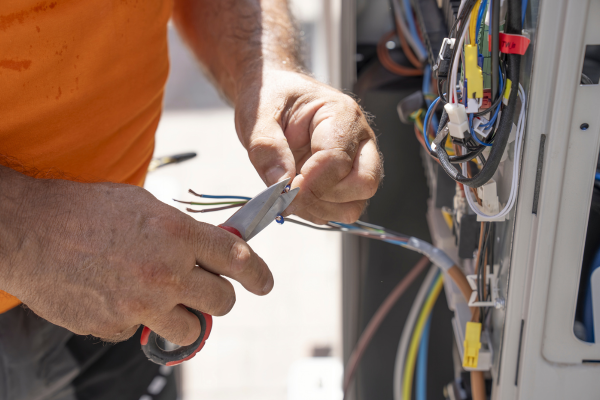
Identifying heat damage requires inspection of wiring in attics, walls, and panels.
Thermal Imaging
Infrared cameras can identify hot spots in walls and ceilings that indicate wiring problems before they become visible failures.
Visual Attic Inspection
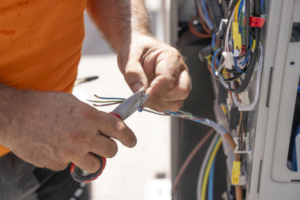
A licensed electrician inspects visible wiring in the attic for signs of insulation hardening, cracking, or separation.
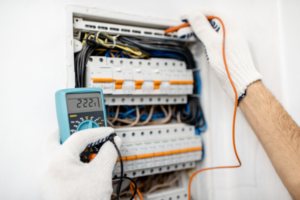
Insulation Resistance Testing
Specialized testing measures the integrity of wiring insulation by detecting current leakage that indicates degradation.
Professional electrical maintenance includes inspection protocols that identify heat damage before it creates a dangerous condition.
Take the Invisible Threat Seriously
Florida’s heat is relentless, and it does not rest during the night or take weekends off. The wiring inside your home absorbs that punishment silently, and the damage accumulates invisibly over years. Understanding this threat helps you prioritize inspections that catch degradation before it becomes a fire or shock hazard hiding inside your walls.