Why Proper Electrical Grounding Protects Your Florida Home From Hidden Dangers
Electrical grounding is one of those systems that works invisibly until it does not. When it is present and functioning, you never think about it. When it is absent or compromised, the consequences can be devastating. Fires, shocks, and destroyed electronics all trace back to grounding failures that could have been prevented.
Many older homes in The Villages and surrounding Florida communities were built before modern grounding standards were adopted. These homes may have two-prong outlets, missing ground wires, or ground connections that have corroded over time. Understanding what grounding does and why it matters helps homeowners recognize a risk that is easy to overlook but dangerous to ignore.
What Electrical Grounding Actually Does
Grounding provides electricity with a safe path to the earth in the event of a fault. Under normal conditions, electricity flows through the hot wire to your appliances and returns through the neutral wire. But when something goes wrong, a ground fault occurs. This means electricity escapes its intended path and seeks an alternative route.
Without grounding, that alternative route might be through a metal appliance case, a water pipe, or worst of all, through a person. Grounding provides a deliberate, low-resistance path directly to the earth so that fault current flows safely away and the circuit breaker trips.
Why Older Florida Homes Are at Greater Risk
Homes built before the 1970s often lack complete grounding systems. Some have partial grounding. Some have grounding that has deteriorated.
Two Prong Outlets Indicate Missing Ground
If your home still has two-prong outlets, those circuits almost certainly lack a ground wire. The third prong on modern plugs connects to the ground system. Without it, the safety path does not exist.
Corroded Ground Connections
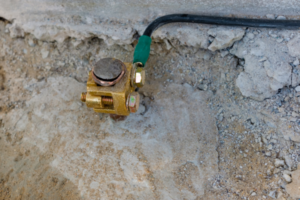
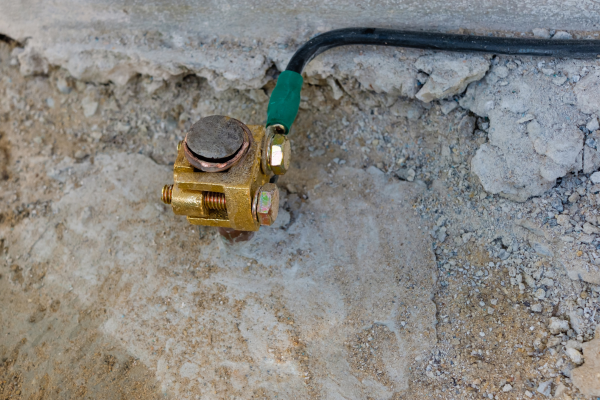
Florida’s humidity and soil chemistry accelerate corrosion on metal ground rods and connections. A ground system that was properly installed decades ago may no longer provide adequate conductivity because corrosion has increased resistance at critical connection points.
Improper Modifications Over the Years
Previous homeowners or unlicensed workers may have added circuits, replaced outlets, or modified wiring without maintaining proper grounding. These modifications create gaps in protection that are invisible without testing.
The Consequences of Inadequate Grounding
The risks of ungrounded or poorly grounded electrical systems are real and serious.
Electric Shock
Without a ground path, fault current flows through whatever conductor is available. Touching a metal appliance case, light switch, or fixture that has developed a fault can deliver a painful or lethal shock.
Fire Risk
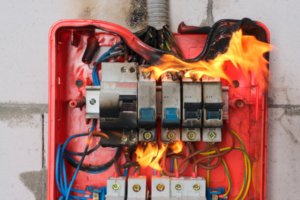
Ground faults generate heat. Without a ground path to trip the breaker quickly, that heat builds at the fault point and can ignite nearby materials. Many electrical fires in older homes are caused by ungrounded circuits where faults smoldered undetected.
Equipment Damage
Sensitive electronics like computers, televisions, and smart home systems are vulnerable to voltage irregularities that proper grounding prevents. Without stable grounding, these devices experience stress that shortens their lifespan.
Surge Protection Failure
Whole-home surge protectors rely on the grounding system to divert excess voltage safely to earth. If the ground connection is compromised, surge protection cannot function properly regardless of how expensive the unit is.
How Professionals Test and Correct Grounding
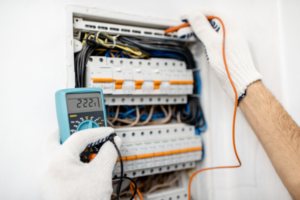
Grounding problems are not visible. They require testing with specialized equipment.
Ground Resistance Testing
An electrician tests the resistance of the ground connection to confirm it provides adequate conductivity. High resistance indicates corrosion, poor soil contact, or inadequate ground rod installation.
Circuit by Circuit Evaluation
Each circuit is tested to confirm that a continuous ground path exists from every outlet and fixture back to the panel and ground system. Missing or broken grounds are identified and mapped.
Correction and Upgrade
Depending on the findings, correction may involve adding ground wires to existing circuits, installing new ground rods, upgrading the panel grounding system, or in severe cases, rewiring circuits entirely. Professional house rewiring services address grounding as a fundamental component of bringing older homes up to modern safety standards.
The Connection Between Grounding and Modern Electrical Protection
Every modern safety device in your home depends on proper grounding to function.
GFCI Outlets Need Ground Reference
Ground-fault circuit interrupters compare current flow on the hot and neutral wires. While they can detect faults without a ground wire present, their protection is more comprehensive when grounding is intact.
Arc Fault Breakers and Grounding
Arc fault circuit interrupters detect arcing conditions that indicate damaged wiring. Proper grounding ensures these devices can trip reliably and that fault current has a safe discharge path.
Surge Protectors Require Solid Ground
As mentioned, surge protection diverts excess voltage to ground. A compromised ground connection renders surge protection ineffective.
Do Not Assume Your Home Is Grounded
Many homeowners assume that because their home has three-prong outlets, it is properly grounded. This is not always true. Three-prong outlets can be installed without a ground wire connected, which provides the illusion of safety without the reality.
The only way to confirm proper grounding is professional testing. If your home is more than 30 years old, has a mix of outlet types, or has never had an electrical maintenance inspection, grounding should be evaluated as a priority.
Protect What You Cannot See
Grounding is the invisible safety net beneath your entire electrical system. When it works, nothing happens. When it fails, everything else in your electrical protection system fails with it. Understanding its importance is the first step toward ensuring your home has the protection it was designed to provide.