The Ultimate Guide to Whole Home Surge Protection for Florida Homeowners
Florida earns its title as the Lightning Capital of the United States for good reason. Central Florida alone experiences more than 1.4 million lightning strikes per year, and each one sends a massive electrical surge radiating through power lines, cable lines, and phone lines. If you live in The Villages, Lady Lake, Belleview, or anywhere in Sumter and Marion County, your home faces a higher surge risk than nearly any other location in the country.
Most homeowners rely on basic power strips to protect their expensive electronics. Unfortunately, a standard power strip offers minimal defense against a serious surge event. True protection requires a layered, whole-home approach that stops surges at the source before they ever reach your devices.
Understanding Power Surges and Why They Destroy Electronics
Power surges are sudden voltage spikes that overwhelm the delicate components inside modern electronics and appliances. Understanding where surges come from and how they cause damage is the first step toward protecting your home.
What Causes a Power Surge
A power surge occurs when voltage spikes dramatically above the standard 120 volts that your home’s wiring carries. Lightning strikes represent the most dramatic cause, but they account for only about 20% of surge events. The remaining 80% come from internal sources: your air conditioning compressor cycling on, your refrigerator starting up, or your pool pump kicking in. Large appliances draw massive amounts of power when they activate, creating small but repeated surges that degrade electronics over time.
How Surges Damage Your Home’s Electronics
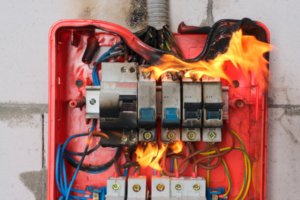
A single major surge can instantly fry a television, computer, smart home system, or refrigerator control board. However, the more insidious threat comes from smaller, repeated surges that chip away at internal components over months and years. Circuit boards weaken, capacitors degrade, and microprocessors fail prematurely. Homeowners often blame manufacturer defects when their appliances die early, never realizing that accumulated surge damage actually caused the failure.
The Real Cost of Surge Damage for Florida Homeowners
Replacing a single HVAC control board costs $300 to $800. A new refrigerator costs $1,500 to $3,000. A home theater system can exceed $5,000. When one major surge event damages multiple systems simultaneously, repair bills climb into the tens of thousands. Insurance may cover some losses, but deductibles, depreciation calculations, and claim limits often leave homeowners covering a significant portion out of pocket.
How Whole Home Surge Protection Works
Effective surge protection uses a layered strategy, intercepting dangerous voltage spikes at multiple points between the utility line and your devices. Each layer reduces the surge energy that reaches the next, creating a comprehensive shield for your entire home.
Type 1 Surge Protection: Stopping Surges at the Meter
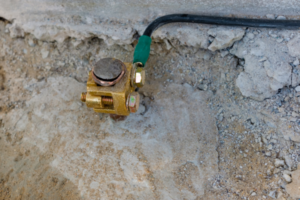
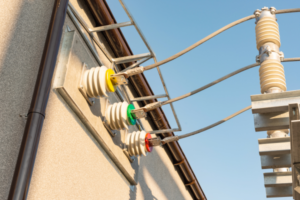
Type 1 surge protectors are installed at the point where your power line connects to your home’s electrical meter. They intercept the largest external surges, including lightning-induced spikes, before that energy enters your home’s wiring. These devices divert excess voltage safely into the ground, preventing it from reaching your electrical panel. Your power utility may offer Type 1 protection, or a licensed electrician can install one directly.
Type 2 Surge Protection: Defending at the Electrical Panel
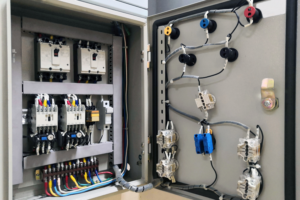
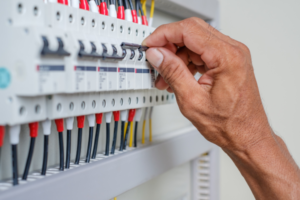
Type 2 surge protectors mount directly inside or beside your main electrical panel. They serve as the primary defense line for your entire home, catching surges that make it past the meter and stopping internally generated surges from cycling through your system. A properly rated Type 2 device handles surges up to 40,000 amps, offering robust protection for every circuit in your home.
Point of Use Protection: Guarding Sensitive Equipment
Even with Type 1 and Type 2 protection in place, particularly sensitive equipment benefits from an additional layer of point-of-use protection. High-quality surge protector strips (not basic power strips) with UL 1449 certification add a final safety barrier for computers, gaming systems, home theater setups, and medical equipment. This three-layer strategy ensures that surges weaken at every stage before reaching your most valuable devices.
Choosing the Right Surge Protection for Your Home
With several surge protection options on the market, selecting the right combination of devices and specifications ensures your investment actually delivers the defense your home needs. A few key factors make all the difference.
Key Specifications That Matter
When evaluating surge protection devices, focus on three critical specifications. First, the clamping voltage determines the threshold at which the device activates. Lower clamping voltage means faster, more sensitive protection. Second, the joule rating indicates how much energy the device can absorb over its lifetime. Higher ratings offer longer-lasting protection. Third, the response time measures how quickly the device reacts to a surge. Look for devices with response times under one nanosecond for optimal defense.
Why Professional Installation Makes a Difference
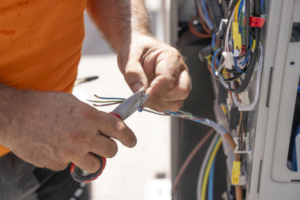
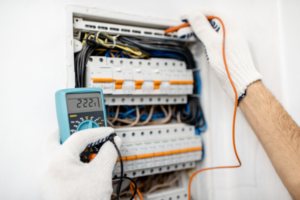
Whole-home surge protectors require direct integration with your electrical panel. Improper installation creates hazards, including poor grounding, incorrect wiring, and inadequate bonding. A licensed electrician ensures the device connects properly, the grounding system meets current code requirements, and the entire installation passes inspection. In The Villages and throughout Central Florida, code compliance also affects your homeowner’s insurance standing.
Maintaining Your Surge Protection System
Surge protectors do not last forever. Each surge event consumes a portion of the device’s protective capacity. Most quality units include indicator lights that show protection status. Have your electrician check these indicators during routine service visits and replace devices when they show diminished protection. Schedule a professional inspection annually to verify that your grounding system remains intact and your protection devices function at full capacity.
Whole home surge protection represents one of the smartest investments a Florida homeowner can make. For a one-time installation cost that typically ranges from $300 to $600, you shield tens of thousands of dollars in electronics and appliances from one of nature’s most unpredictable forces. In a state where lightning strikes outnumber any other, this protection transforms from an optional luxury to an essential safeguard.